Onboard Standards
What Comfort Really Includes
Too often, railway operators conflate comfort with frivolous amenities—such as branded toiletries or loud digital screens. True onboard serenity is physical, acoustic, and spatial. It is the ability to stretch one's legs without hindrance, converse in normal tones, and sleep soundly through nocturnal switch tracks.
Anatomy of the Carriage
The Elements That Dictate Rest
When assessing a rail journey lasting longer than four hours, five core design factors govern how refreshed you feel upon arrival:
1. Bogie Suspension & Acoustic Dampening
Modern air-suspension bogies dramatically reduce the lateral sway and high-frequency vibrations caused by rail joins and turnouts. Carriages with double-glazed laminated acoustic glass eliminate the harsh whoosh of crossing freight trains and tunnel pressure surges.
2. Seating Pitch & Sightlines
In standard commuter configurations, window pillars often block direct lateral sightlines. In true scenic saloons, seats are indexed precisely to the window bays, ensuring that every seat has an unobstructed viewing frame without needing to crane one's neck forward.
3. Climate & Air Exchange
Older carriages can suffer from uneven convection heating or stifling humidity during winter mountain traverses. Modernized premium stock employs multi-zone climate systems with continuous HEPA filtered fresh-air injection that prevents the drowsy fatigue common on long voyages.
"True luxury on rails is not gilded champagne flutes; it is having five feet of personal clearance, quiet wheels, and an unhurried steward who knows when to draw the blinds."
Comparative Specifications
Carriage Categories at a Glance
A realistic comparison of seating and cabin formats across European and global long-distance lines:
| Class / Tier | Seat Pitch / Space | Dining Provision | Acoustic Level | Ideal For |
|---|---|---|---|---|
| Standard Panoramic | 82–88 cm pitch (2+2 layout) | At-seat trolley service or buffet car access | Moderate ambient chatter; active family travel | Day trips under 4 hours on scenic corridors |
| First Saloon | 98–105 cm pitch (2+1 layout) | Table reservations in dedicated dining car | Quiet reading environment; carpeted aisles | Full-day mountain transitions requiring space |
| Excellence / Premier | Dedicated lounge armchair (1+1) | Multi-course meal served at seat with wine pairing | Whisper-quiet; dedicated carriage steward | Milestone occasions & uninterrupted photography |
| Traditional Sleeper (Couchette) | 4 or 6 fold-down bunks per cabin | Morning coffee and croissant box | Variable; shared compartment dynamic | Budget night crossings with companions |
| Ensuite Sleeper Cabin | Private 2-berth cabin with private shower/WC | Full dinner in restaurant car; cooked breakfast | High insulation; controlled temperature & locks | Overnight trans-continental routes (e.g. Venice Simplon, Nightjet Deluxe) |
The Dining Ritual
The Dignity of the Dining Car
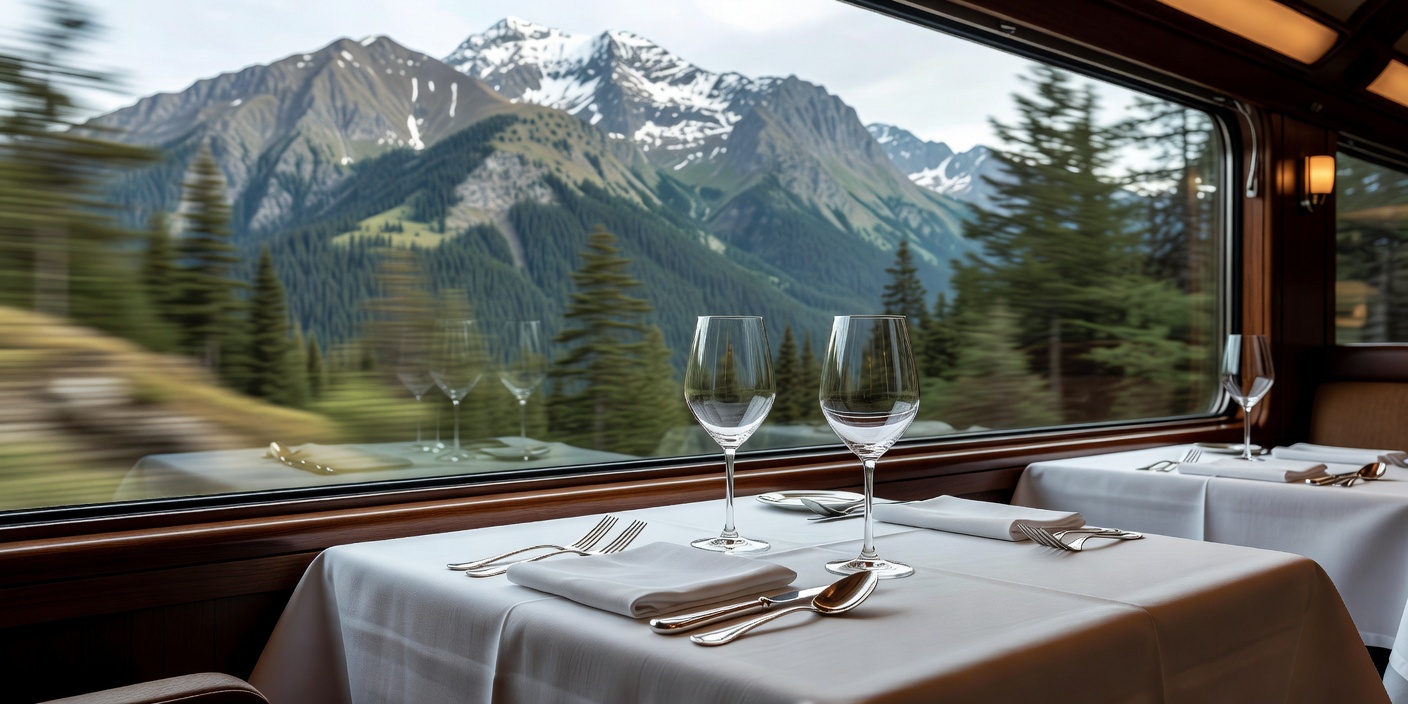
Dining while the scenery unfolds at fifty miles per hour is railway culture at its finest. Unlike modern airline food trays, authentic rail dining cars operate live onboard galleys with chefs preparing regional fare—from Valais mountain cheeses to smoked Scottish trout.
Carriage dining transforms dining into a communal pleasure, where solo travelers and traveling companions share conversations over starched tablecloths while headlights sweep across darkened forest ravines.
Planning Advice
Booking the Right Cabin
When selecting your ticket, always scrutinize carriage blueprints. Opt for compartments positioned near the center of the car, midway between the bogies (wheels), where vertical movement and track reverberation are physically minimized. Avoid compartments adjacent to vestibule doors or gangway connections, which experience intermittent latch clicks throughout the night.